
Blog 2: Honeycomb Boards vs Corrugated Cardboard
SEO Information
- SEO Title: Honeycomb Boards vs Corrugated Cardboard for Export Packaging
- Meta Description: Compare honeycomb boards and corrugated cardboard for export protection, including strength, weight, sustainability, applications, and cost considerations.
- URL Slug: /blog/honeycomb-boards-vs-corrugated-cardboard-export-packaging
- H1: Honeycomb Boards vs Corrugated Cardboard: Which Packaging Material Is Better for Export Protection?
Introduction
When buyers search for paper-based protective packaging, two materials often appear in the same conversation: honeycomb boards and corrugated cardboard. Both are widely used in packaging, both are paper-based, and both can support sustainable packaging goals. However, they are not the same material, and they are not always suitable for the same application.
For export packaging, the choice between honeycomb boards and corrugated cardboard should be based on product weight, surface protection requirements, compression needs, packaging structure, shipping distance, and handling conditions.
At HengNice, customer requirements often begin with a practical question: "Should we use honeycomb board, corrugated board, or a combination?" The answer depends on how the product is packed, where damage usually occurs, and what role the material must play in the packaging system.
This guide compares honeycomb boards and corrugated cardboard from a procurement and export protection perspective.
What Is Honeycomb Board?
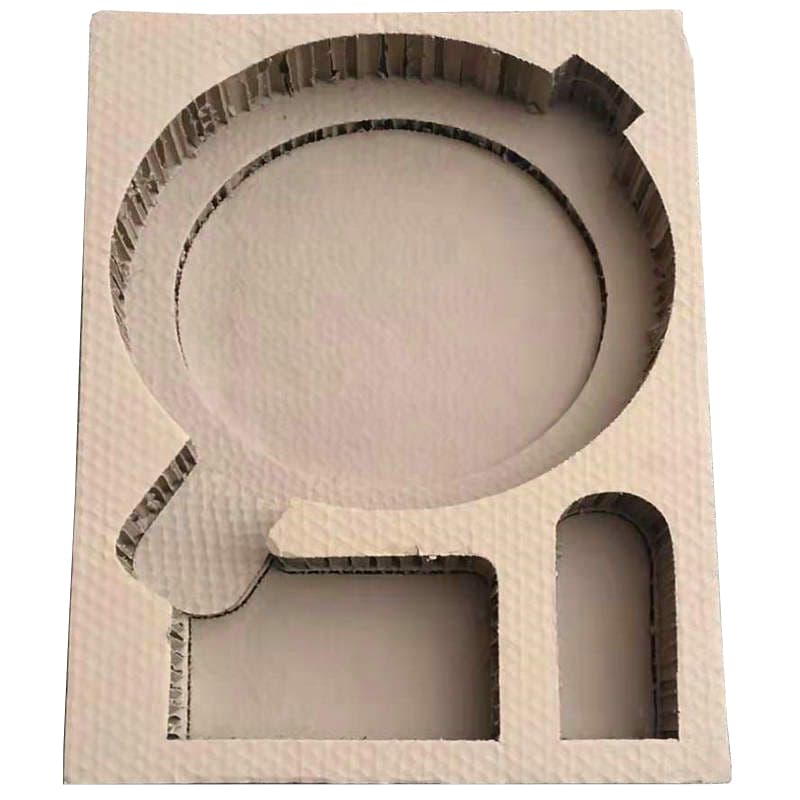
Honeycomb board is a paper-based panel made with a honeycomb core structure between paper liners. The core design creates a high strength-to-weight ratio. This means the board can provide cushioning, separation, surface protection, and structural support while remaining relatively lightweight.
Honeycomb boards are commonly used for:
- Furniture protection
- Door and panel packaging
- Appliance packaging
- Industrial product separation
- Pallet top sheets
- Protective pads
- Heavy-duty paper packaging
- Custom honeycomb packaging solutions
The honeycomb structure helps absorb impact and distribute pressure across the board surface.
What Is Corrugated Cardboard?
Corrugated cardboard is made from fluted paper between liner sheets. It is commonly used for cartons, trays, pads, partitions, and shipping boxes. Corrugated board is flexible, easy to convert, and widely available.
It is commonly used for:
- Shipping cartons
- Retail packaging
- Export boxes
- Partitions and dividers
- Light to medium product protection
- Printed packaging
Corrugated cardboard is an excellent material for boxes and general packaging, but it may not always provide the same flat compression resistance or panel-like support as honeycomb board.
Key Differences Between Honeycomb Boards and Corrugated Cardboard
1. Structure
Honeycomb board uses a cell structure similar to a honeycomb. This structure helps distribute pressure and resist compression across a larger area.
Corrugated cardboard uses fluted paper. The flute provides cushioning and stacking strength, especially when used in carton form.
In simple terms:
- Honeycomb board works like a lightweight structural panel.
- Corrugated cardboard works well as a foldable packaging and carton material.
2. Strength-to-Weight Ratio
Honeycomb board is often selected when buyers need stronger panel support without using wood or heavy plastic. It can protect broad surfaces and provide good compression performance depending on thickness and paper quality.
Corrugated cardboard is lighter and easier to process, but for large flat surfaces or heavy product separation, it may require multiple layers or stronger flute combinations.
3. Surface Protection
Honeycomb boards are useful for protecting large surfaces such as furniture panels, glass-related packaging, doors, boards, and machinery surfaces. The flat panel shape helps distribute pressure and reduce localized damage.
Corrugated cardboard can also protect surfaces, but it may bend more easily depending on flute type and thickness.
4. Cushioning Performance
Both materials can provide cushioning, but they behave differently.
Honeycomb board provides broad-area impact absorption and compression support. Corrugated cardboard provides flexible cushioning and is easier to fold around products.
For fragile or high-value export goods, buyers may combine honeycomb board with edge protectors, cartons, and wrapping materials.
5. Sustainability
Both honeycomb board and corrugated cardboard can support paper-based packaging goals. They are often recyclable and can help reduce reliance on wood, plastic, or foam in certain applications.
However, sustainability should not be treated as a slogan only. Buyers should ask:
- Is the material recyclable in the destination market?
- Does the packaging reduce product damage?
- Can packaging weight be optimized?
- Does the structure reduce unnecessary material use?
Packaging that fails during transport is not truly sustainable because damaged goods create waste, claims, and replacement shipments.
When to Choose Honeycomb Boards
Honeycomb boards are often suitable when the product needs flat surface protection or stronger panel support.
Choose honeycomb boards when:
- Products have large flat surfaces.
- Surface scratches are a major risk.
- Wood-based packaging is too heavy or costly.
- A lightweight but strong protective layer is needed.
- Products need separation inside cartons or pallets.
- Export loads require cushioning and compression resistance.
Examples include furniture, doors, panels, appliances, cabinets, industrial parts, and sensitive surface materials.
When to Choose Corrugated Cardboard
Corrugated cardboard is often suitable when products need a box, tray, printed carton, or flexible packaging structure.
Choose corrugated cardboard when:
- A shipping carton is required.
- Product weight is light to medium.
- Packaging needs printing or folding.
- Cost and production speed are priorities.
- Products need partitions or simple pads.
- Packaging volume must be optimized.
Heavy duty export cartons may use stronger corrugated structures, such as multi-ply sheets, depending on product weight and stacking requirements.
When to Use Both Materials Together
In real export packaging, honeycomb boards and corrugated cardboard are not always competitors. They can be combined.
For example:
- Corrugated carton outside, honeycomb board inside for surface protection
- Honeycomb pads on top and bottom of cartons
- Honeycomb board as pallet layer sheet
- Corrugated box with paper edge protectors for corner reinforcement
- Honeycomb packaging with PET strapping and stretch film for load securing
This combined approach is useful when a product needs both structural packaging and surface protection.
Practical Selection Checklist
Before choosing between honeycomb board and corrugated cardboard, buyers should prepare:
- Product dimensions
- Product weight
- Surface sensitivity
- Packing method
- Pallet stacking method
- Export destination
- Container loading requirements
- Storage time and humidity conditions
- Whether printing is required
- Whether recyclable paper-based packaging is a priority
For large or heavy products, ask the supplier to review product photos and packaging drawings. If possible, test samples under real shipment conditions.
Factory Testing and Shipment Inspection
For export packaging, material selection should be verified through practical checks.
Useful checks include:
- Compression observation during stacking
- Surface scratch inspection after handling
- Corner damage check after strapping
- Drop or vibration simulation when relevant
- Carton deformation inspection
- Pallet stability after wrapping
At the shipment inspection stage, buyers should check whether packaging is applied consistently. Even the right material can fail if it is cut too short, positioned incorrectly, or combined with weak strapping.
FAQ
Is honeycomb board stronger than corrugated cardboard?
Honeycomb board can provide stronger flat panel support and compression resistance in many applications, but corrugated cardboard may be better for cartons and foldable packaging. The right choice depends on product use.
Is honeycomb board suitable for export packaging?
Yes. Honeycomb board is widely used for export packaging, especially for surface protection, cushioning, pallet layers, and custom paper-based protective packaging.
Is corrugated cardboard cheaper than honeycomb board?
In many simple packaging applications, corrugated cardboard may cost less. However, honeycomb board may reduce damage for certain products, which can lower total shipment risk.
Can honeycomb board replace wood packaging?
In some protection and panel support applications, honeycomb board can reduce the need for wood. For heavy structural loads, packaging design should be evaluated carefully.
Which is better for furniture export?
Furniture often benefits from honeycomb boards for surface and corner protection, combined with cartons, edge protectors, and stretch film.
Conclusion
Honeycomb boards and corrugated cardboard are both valuable paper-based packaging materials, but they serve different roles. Corrugated cardboard is excellent for cartons, trays, and flexible packaging structures. Honeycomb board is better when stronger flat surface protection, cushioning, or panel support is needed.
For export packaging, the best solution may combine both materials with paper edge protectors, PET strapping, stretch film, and heavy duty cartons.
CTA
Not sure whether honeycomb boards or corrugated cardboard are better for your product? Send HengNice your product dimensions, weight, photos, and export destination. Our team can help review your packaging method and suggest a practical paper-based protection solution.
Image Planning & AI Prompts
Insert Position: After H1 Caption: Honeycomb board and corrugated cardboard serve different roles in export packaging. ALT Text: Honeycomb board and corrugated cardboard comparison for export packaging AI Prompt: Photorealistic side-by-side comparison of honeycomb paper board and corrugated cardboard sheets on a clean industrial table, export cartons in background, premium B2B packaging photography, no text, no logos.
- Image Use: Comparison hero image
Insert Position: After "What Is Honeycomb Board?" Caption: Honeycomb board provides lightweight panel support for protective packaging. ALT Text: Close-up of honeycomb paper board core structure AI Prompt: Macro photo of honeycomb paper board core structure with kraft paper texture, clean lighting, high detail, shallow depth of field, industrial packaging material, no text.
- Image Use: Product detail image
Insert Position: After "When to Use Both Materials Together" Caption: Honeycomb boards can be combined with cartons for stronger export protection. ALT Text: Honeycomb board used inside corrugated carton for furniture export packaging AI Prompt: Realistic factory packing scene showing honeycomb board pads placed inside a corrugated export carton around flat furniture panels, worker hands visible, clean workshop, professional B2B style, no brand logos.
- Image Use: Application scenario
Insert Position: Before FAQ Caption: Shipment inspection confirms whether paper-based packaging is applied correctly. ALT Text: Inspector checking honeycomb board and carton packaging before export shipment AI Prompt: Documentary-style export shipment inspection with worker checking honeycomb board protective pads and corrugated cartons on pallets, warehouse setting, natural light, high quality industrial realism.
- Image Use: Shipment inspection
CTA / Popup Planning
CTA Text: Need help comparing honeycomb and corrugated packaging? Button: Ask for Product Catalog
- Mid-article CTA Position: After "Practical Selection Checklist"
CTA Text: Send your product photos for a paper-based packaging recommendation. Button: Contact Us
- End CTA Position: After Conclusion
Popup Title: Compare Packaging Materials for Your Product Popup Copy: Upload or describe your product size, surface sensitivity, and export destination. HengNice can recommend honeycomb board, corrugated carton, or a combined solution. Fields: Name required, Email required, Phone required, Product Requirement optional Submit Button: Send Packaging Details
- Popup Trigger: Exit intent or 45 seconds on page